Andreoffringa

Astronomy

André's Pages: Astronomy, C++ and Other Interests

Welcome to a personal collection of notes and articles covering radio astronomy, C++ programming and other subjects that spark curiosity. Browse the latest Astronomy entry below, or explore the wider archive.

AOFlagger software logo used for radio astronomy data processing
AOFlagger tooling

Astronomy

30,000 Galaxies in the EoR0 Field

Published on Wednesday, 28 June 2017, this post accompanies the paper Parametrizing Epoch of Reionization foregrounds: a deep survey of low-frequency point-source spectra with the Murchison Widefield Array. For that work, a large and deep radio image was produced using the Murchison Widefield Array (MWA) radio telescope — at the time of writing, the deepest image ever made with the MWA.

Each point-like source in the image is a galaxy, and altogether more than 30,000 galaxies can be told apart. The image spans roughly 40 x 40 degrees of sky.
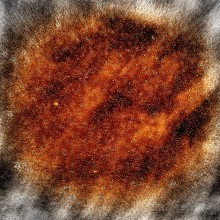
Deep radio image of the EoR0 field showing thousands of point-like galaxies
Deep MWA radio image of the EoR0 field

Tagged as: Astronomy. Continue with the full entry to read more.

Read More View the Paper Astronomy Topic

Join the Discussion

Sign in to leave a comment on this post.

Log In Request New Password

Frequently Asked Questions

What will I find on this Astronomy topic page?
This page brings together articles and resources tagged with Astronomy, including posts on radio astronomy observations and related research. The listing expands as new Astronomy-tagged articles are published.
What does the EoR0 field image show?
The featured article “30,000 galaxies in the EoR0 field” describes a deep radio image captured with the Murchison Widefield Array (MWA) radio telescope. Every point-like source in the image is a galaxy, and more than 30,000 galaxies can be distinguished across roughly 40 x 40 degrees of sky.
Which telescope produced the deep radio image?
The image was made with the Murchison Widefield Array (MWA) radio telescope and, at the time of writing, was the deepest image produced with the MWA.
Where can I find related publications?
The article links to the paper “Parametrizing Epoch of Reionization foregrounds: a deep survey of low-frequency point-source spectra with the Murchison Widefield Array”. A full list of authored and coauthored work is available on the Publications page.
How can I follow updates to this topic?
An RSS feed for the Astronomy topic is available through the feed icon on this page, and new entries also appear under News & memos.
RSS feed icon for the Astronomy topic
Subscribe via RSS

Site built with Drupal.

Drupal